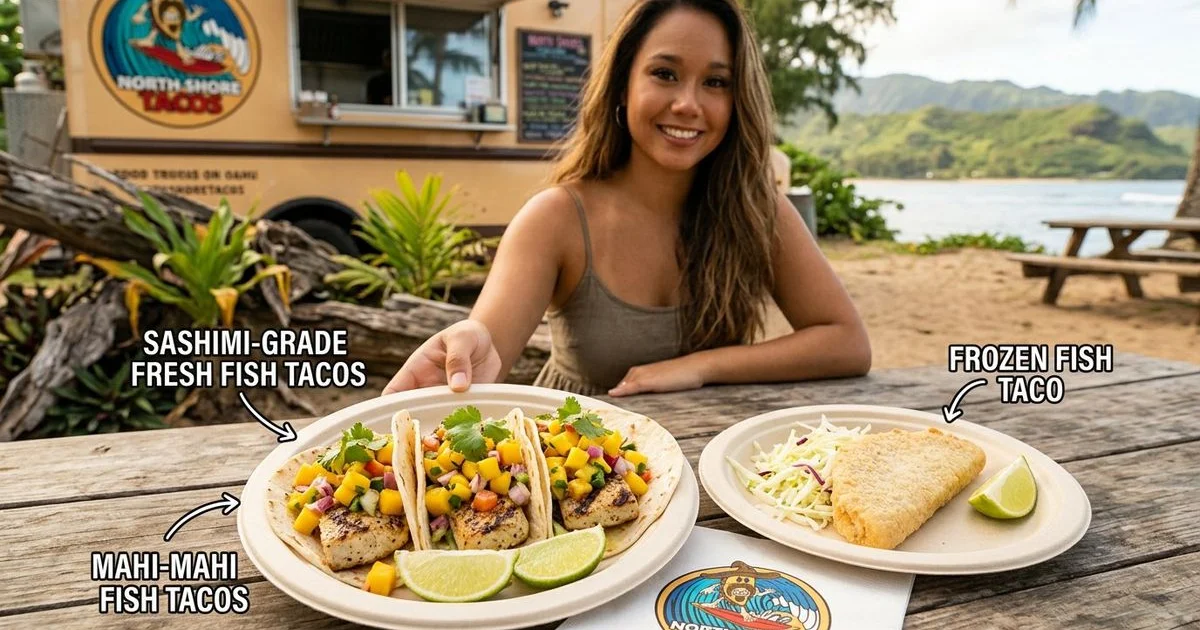
It is a common frustration for food lovers in Oahu to find an incredible fish taco one day and a disappointing one the next. We see this inconsistency all the time in the local food scene. The secret almost always comes down to the starting quality of the protein.
At North Shore Tacos, our team is dedicated to providing high-quality Mexican cuisine and exceptional customer service to the local community. Sashimi-grade fish goes into every taco on the menu here, and the flavor difference is obvious immediately.
Let’s look at the science behind Sashimi-Grade vs Frozen Fish Tacos: Why Fresh Matters.
Sashimi-Grade vs Frozen Fish Tacos: Why Fresh Matters
If you have ordered fish tacos around Oahu, you have probably noticed a massive quality gap between spots. We use sashimi-grade fish in every taco served at North Shore Tacos. This choice creates a difference you can taste from the very first bite.
Sashimi-grade is often misunderstood by consumers. The United States Food and Drug Administration does not formally regulate the specific term “sashimi-grade” for marketing. However, they do enforce strict parasite destruction guidelines for any fish meant to be eaten raw.
Our team ensures that every piece of fish meets these rigorous safety standards. The FDA requires blast freezing at negative 31 degrees Fahrenheit for 15 hours to guarantee safety.
“True sashimi-grade quality relies on precision temperature control, locking in the ocean-fresh texture before cellular damage can occur.”
This process preserves the natural flavor, texture, and vibrant color of the meat. Sushi restaurants are not the only places that benefit from these high standards.
We know starting with superior cell structure and moisture content makes a better taco. A high-quality cut easily beats anything sitting in a commercial freezer for weeks.
The FDA Standard for Raw-Ready Fish
While the term is used loosely in marketing, the science behind it is strict. The FDA requires commercial blast freezing at negative 31 degrees Fahrenheit for a minimum of 15 hours.
Our suppliers follow these exact 2026 protocols to ensure perfect safety and quality. This rapid process locks in the original texture before large ice crystals can form.
The Problem with Frozen Fish
Frozen fish is not inherently bad. Modern flash-freezing technology handles preservation reasonably well under perfect conditions.
Our chefs know that the real issue is the long chain of events between the ocean and the plate. Fish muscle is roughly 80 percent water. We see the damage when slow freezing allows large, geometric ice crystals to form inside those muscle fibers.
“When fish is frozen slowly, expanding ice crystals puncture the cell walls, causing massive flavor and moisture loss upon thawing.”
These sharp crystals physically puncture the delicate cell walls. Moisture immediately escapes the moment the fish eventually thaws.
Our kitchen avoids this because that fluid loss ruins the texture. That cellular damage creates a mushy, waterlogged bite that no amount of seasoning can hide.
Here is what happens with typical frozen fish supply chains:
- The catch sits in a holding tank for days before reaching a processing facility.
- A commercial freezer drops the temperature slowly, maximizing cellular damage.
- The product travels across the Pacific inside a standard cargo container.
- Distributors hold the inventory in cold storage for weeks or even months.
- The restaurant thaws the fillets, draining away the remaining flavor and moisture.
By the time that fillet lands in a shell, the ocean-fresh quality is completely gone. We refuse to serve something dense, chewy, and bland. A great fish taco requires a light, tender, and flaky protein.
How We Source Our Fish Differently
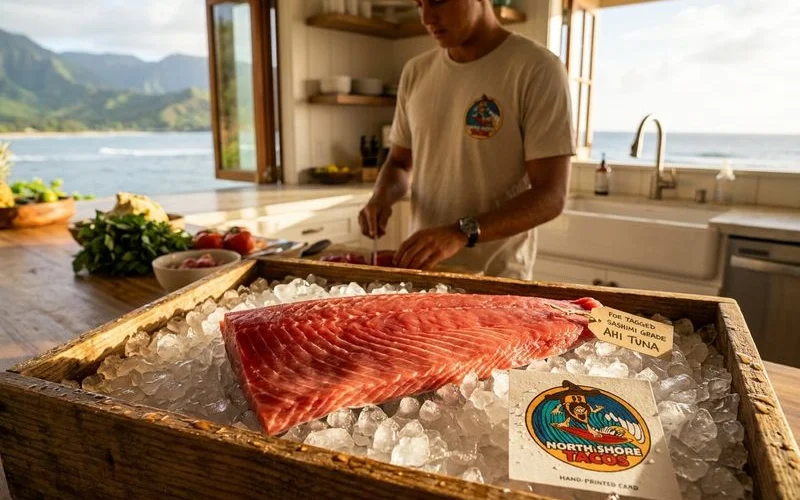
Building relationships with local fishermen right off Oahu’s North Shore changes everything. Our daily sourcing process begins long before sunrise at the Haleiwa Small Boat Harbor.
The tracking system tells us exactly which boats are heading out and what species they are targeting for the day. This direct line from the Pacific Ocean to the kitchen eliminates middlemen and warehouses entirely.
The Haleiwa Harbor Connection
When the fresh Ahi or Mahi-Mahi arrives, the inspection is completely hands-on. Our team checks the eyes for crystal clarity and the flesh for perfect firmness.
A clean, briny ocean scent is the best indicator that the catch was swimming just hours ago. We reject anything that does not meet these exact specifications. It is really that simple.
Our 2026 quality standards include:
- Strict temperature control from the Haleiwa docks to the kitchen, never breaking the cold chain.
- Same-day processing, ensuring fillets are cleaned and portioned within hours of the catch.
- Rigorous visual and tactile inspection of every single piece before it hits the grill.
- Daily rotation practices that guarantee nothing sits longer than a single service day.
Why You Can Taste the Difference
The texture of a fish taco made with sashimi-grade protein tells the whole story. Our fresh Hawaiian fish flakes apart naturally, revealing a moist and buttery quality.
This rich texture holds up beautifully against house-made salsas and crisp slaws. You simply cannot replicate this depth of flavor with a frozen product shipped from thousands of miles away.
The Science of the Perfect Sear
Fresh proteins respond completely differently to intense heat. Our grill cooks sear fresh Mahi-Mahi and Ahi at a scorching 450 to 500 degrees Fahrenheit.
This high heat creates a beautiful, caramelized crust on the outside in just a few minutes. We pull the Ahi when the internal temperature hits a cool 65 to 70 degrees Fahrenheit for a perfect medium-rare center.
“A perfect sear requires high heat and a dry exterior, two conditions that are impossible to achieve with waterlogged frozen fillets.”
Frozen fish constantly fights the grilling process. Excess water inside the thawed fillet leaks out onto the hot cooking surface.
Our cooks know this liquid drops the grill temperature and essentially steams the fish. Steaming is the exact reason why so many tacos at other restaurants taste flat and one-dimensional.
To make the comparison perfectly clear, look at the data:
| Feature | Fresh Sashimi-Grade Ahi | Standard Frozen Fish |
|---|---|---|
| Grill Temperature | Sustains 450°F+ for a fast sear | Drops surface heat due to leaking water |
| Moisture Retention | Intact cell walls keep natural juices inside | Punctured cells leak up to 1.5% of total weight |
| Cooking Result | Caramelized crust with tender center | Steamed, rubbery, and uniform texture |
| Flavor Profile | Sweet, briny, and distinct | Bland and easily overpowered by salsa |
What to Look for When You Order Fish Tacos
Not every restaurant discloses their seafood sourcing details. We recommend looking for a few telltale signs that easily separate the fresh from the frozen.
Pay close attention to the physical texture first. Our experts always suggest the “flake test” to determine true quality.
Fresh fillets break into large, distinct flakes, while frozen cuts often feel rubbery or oddly uniform.
Signs of quality fresh fish tacos:
- The protein shows visible, natural flaking rather than a compressed, blocky appearance.
- The aroma is clean and reminiscent of a sea breeze rather than a pungent fishy smell.
- The raw or seared color looks vibrant and natural, avoiding any dull gray tones.
- The entire dish feels balanced because the protein is the star, not a vehicle for heavy sauces.
The fish should always be the undeniable hero of the dish. We invest the extra effort to source sashimi-grade products every single day for this exact reason.
This commitment costs more and requires significantly more manual labor. We happily sell out on days when the local catch is small rather than serve a subpar meal.
Serving you something extraordinary is always better than settling for ordinary.
The North Shore Advantage
Living and cooking on the North Shore provides a massive culinary advantage. Our kitchen sits just minutes from some of the most productive fishing waters in the entire United States.
The commercial fishermen here are neighbors and friends who share a deep commitment to quality. We view every meal served as a showcase of the best the ocean offered that very morning.
Local Partnerships Drive Quality
These direct relationships mean the seafood skips the massive distribution centers entirely. Our team secures premium cuts that most mainland restaurants can only dream of accessing.
The result is a menu that truly reflects the daily rhythm of the Hawaiian waters. We prepare every single plate with extreme care and serve it with immense pride.
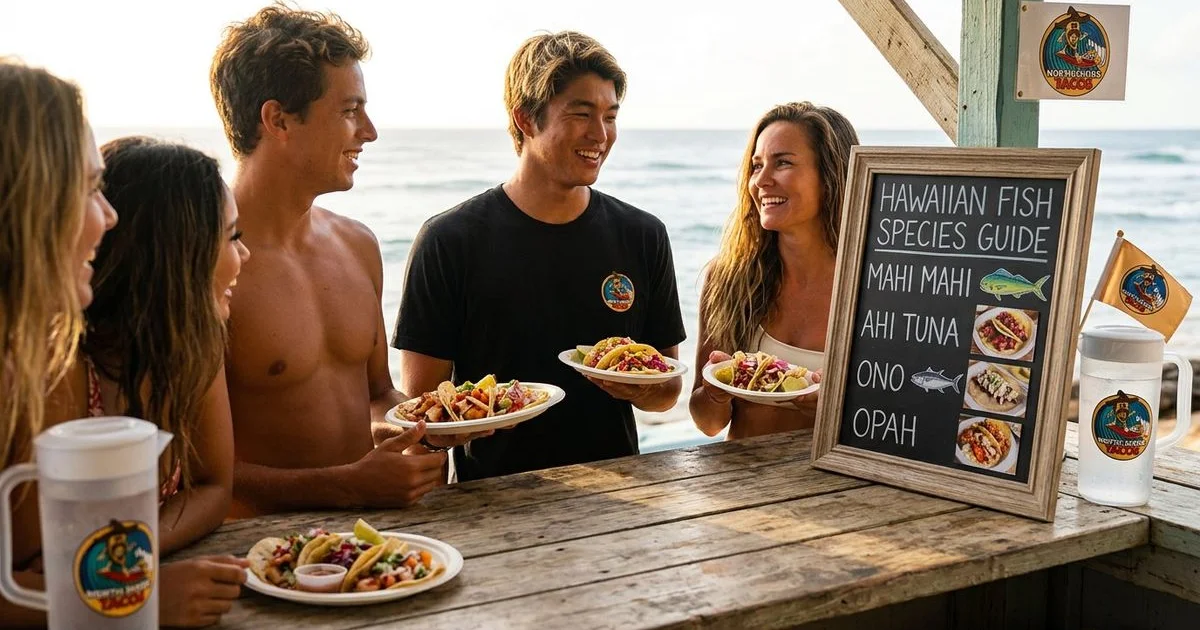
Come taste the difference for yourself. Our crew is ready to show you what a proper Hawaiian taco should taste like. Once you experience a meal made with truly fresh, sashimi-grade fish, your standards will change forever.
Conclusion
Finding a great meal shouldn’t feel like a gamble. We know that the quality of your ingredients dictates the quality of your experience. Understanding the science behind Sashimi-Grade vs Frozen Fish Tacos: Why Fresh Matters helps you make better dining choices across the island.
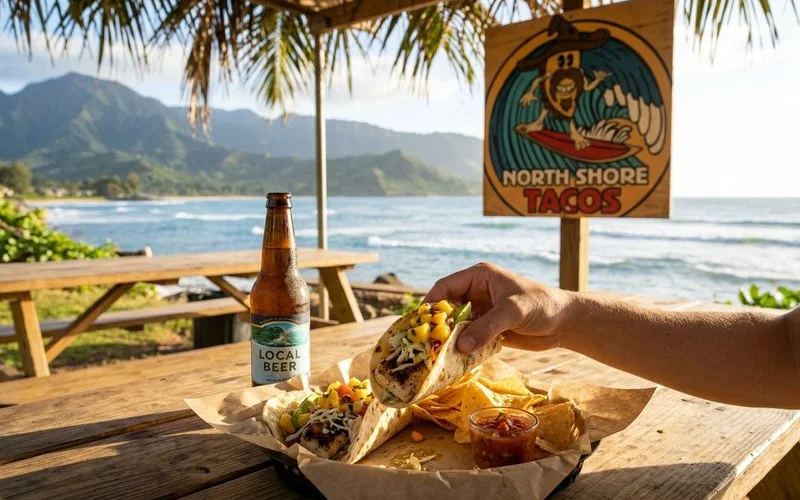
The next time you are exploring Oahu, skip the frozen compromises. We invite you to stop by North Shore Tacos to taste the true difference. Grab a plate, enjoy the ocean breeze, and see why fresh always wins.