Any seasoned restaurant operator knows the temptation of the food service shortcut.
A recent 2026 National Restaurant Association report highlighted “flavor escapism” as a massive consumer trend, yet many kitchens still rely on pre-packaged solutions to save time.
Our approach to this industry challenge has always been aggressively old-school.
This guide covers the specific techniques, ingredient choices, and daily routines that set North Shore Tacos apart.
You will see exactly why everything from scratch: how we make our salsas, beans, and rice is a daily operational standard.
We want to walk you through the reality of running a high-volume, fresh-ingredient kitchen.
The results speak for themselves.
It All Starts Before Dawn
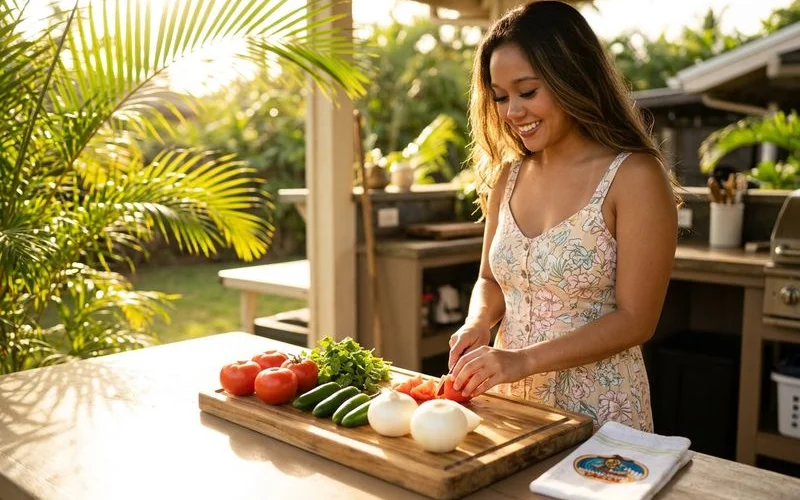
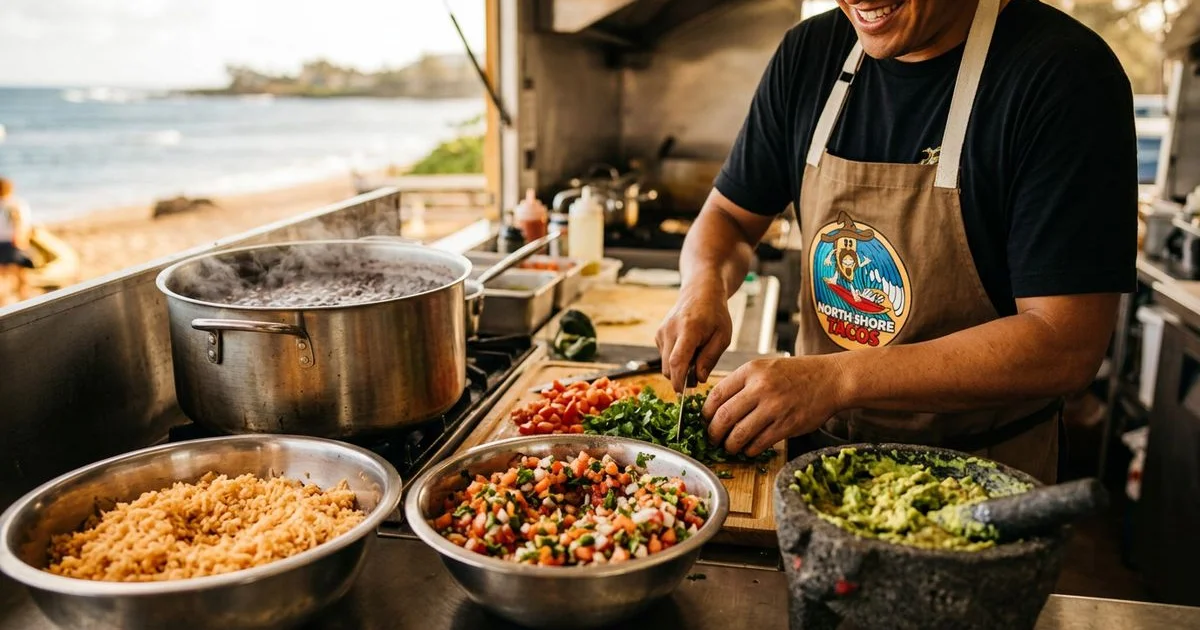
Our kitchen lights flip on at five in the morning, immediately filling the space with the scent of onions and garlic hitting a hot pan.
That aroma signals the start of a long, slow journey for ingredients destined for the serving line.
By the time the first surfer walks up to order at eleven, every single component has been prepared fresh.
Our team refuses to open cans, tear seasoning packets, or thaw frozen blocks under running water.
This strict commitment has defined North Shore Tacos since the doors first opened in 2010.
Making food this way requires earlier mornings and longer prep lists.
We accept tighter profit margins because the massive difference in flavor justifies the extra effort.
Quality always dictates the menu.
The food simply tastes better when prepared correctly.
The Salsa Station
Salsas act as the heartbeat of a great Mexican menu.
These vibrant sauces appear on virtually every item served, from breakfast burritos to late-night nachos.
Our crew prepares five distinct salsas every single day using recipes refined over fifteen years of repetition.
Most grocery stores stock the MD-2 pineapple variety, which typically scores a 10 to 12 on the Brix sweetness scale.
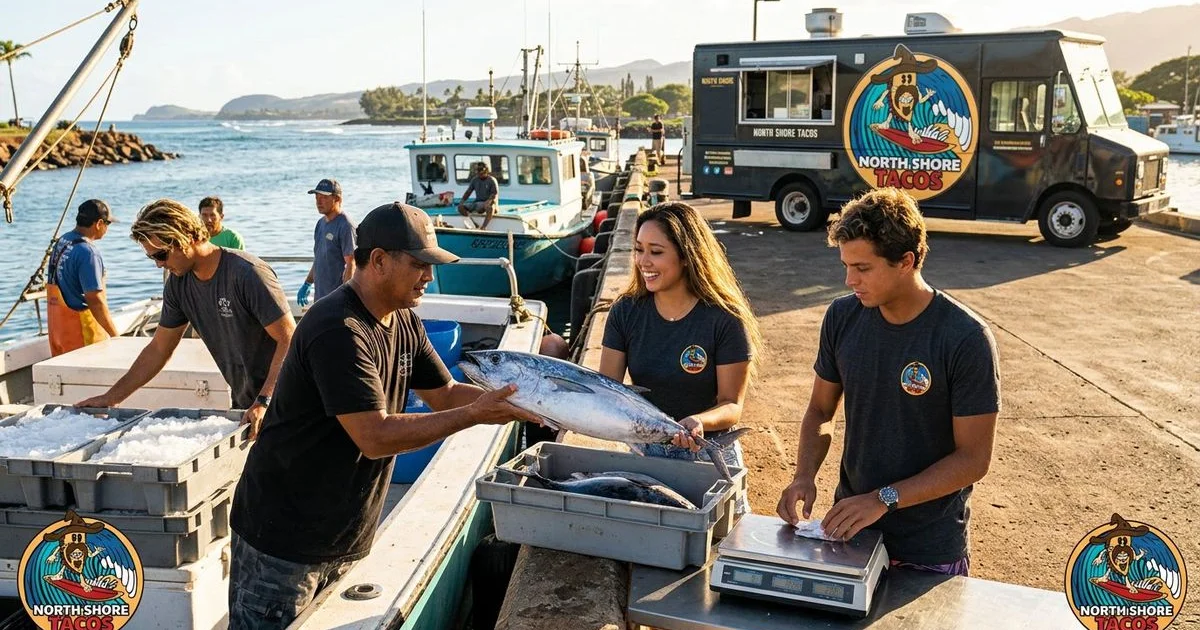
The Maui Gold pineapples sourced for the kitchen are the MD-1 variety, hitting a much sweeter 14 to 16 on that same scale.
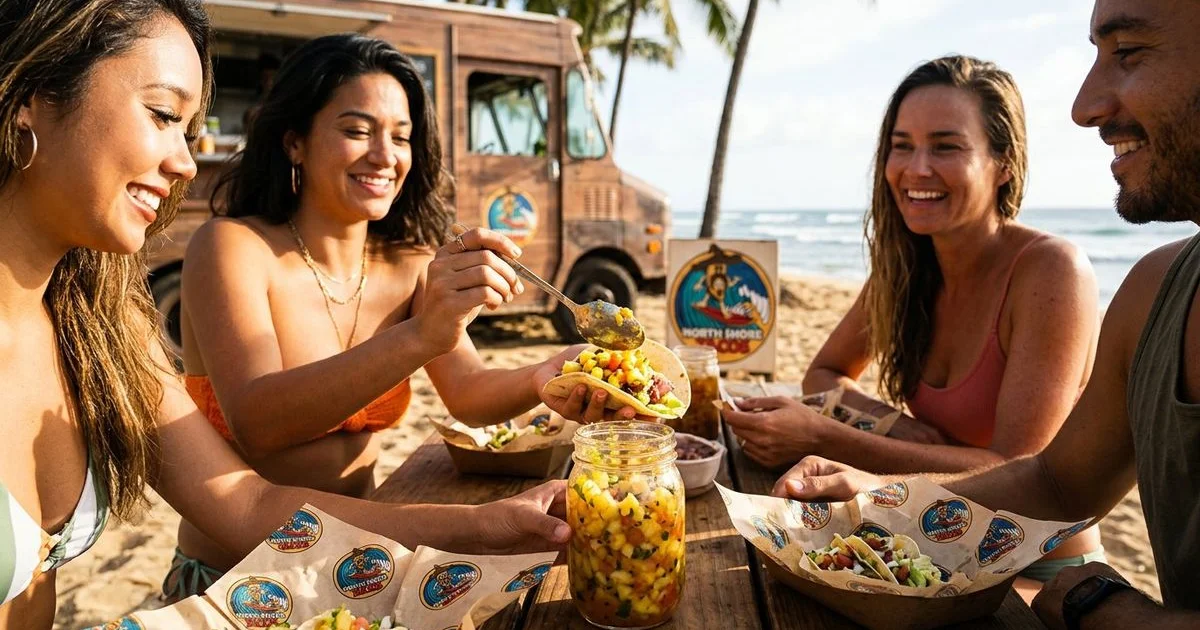
Our famous pineapple salsa relies heavily on this specific type of fruit grown right here on the island.
This specific fruit features a very low 5 percent acidity.
A standard pineapple will bite back with a harsh tang, but the Maui Gold delivers pure, smooth sweetness.
We dice this premium fruit by hand and combine it with red onion, fresh cilantro, minced jalapeno, and lime juice.
| Pineapple Type | Brix Sweetness Score | Acidity Level | Flavor Profile |
|---|---|---|---|
| Standard Grocery (MD-2) | 10 to 12 | High | Sharp, tangy bite |
| Maui Gold (MD-1) | 14 to 16 | Low (5 percent) | Smooth, pure sweetness |
The Roasted and Fresh Salsas
Whole Roma tomatoes, serrano peppers, and garlic cloves sit under a screaming hot broiler until their skins blister and blacken.
That deep charring process creates an intense, smoky depth that pairs perfectly with grilled proteins.
Our roasted tomato salsa requires this completely different daily production method.
Each batch of fresh pico de gallo, creamy avocado tomatillo salsa, and fiery habanero sauce starts from whole, raw ingredients.
Leftovers at closing time become staff meals or go straight into the compost bin.
Our kitchen treats absolute freshness as a mandatory, non-negotiable standard.
Beans Worth Bragging About
This high praise is unusual because beans often act as an underrated, neglected filler item.
Most fast-casual spots rely on canned products or reconstituted paste for speed and cheap food costs.
Our customers constantly tell us the beans are the best thing on the plate.
A standard cup of canned pinto beans contains over 900 milligrams of sodium, representing about 40 percent of a daily recommended limit.
Dried beans contain virtually zero milligrams of sodium before cooking.
We refuse to serve canned goods for two very specific, data-driven reasons.
Starting with dry ingredients gives a chef total control over the final flavor profile and salt content.
The cost difference is also striking, with dry beans averaging around 14 cents per serving compared to 45 cents for a national canned brand.
We take those financial savings and invest them directly into better local produce and higher-quality proteins.
”Starting with dry ingredients gives a chef total control over the final flavor profile and salt content, eliminating the metallic taste often found in canned alternatives.”
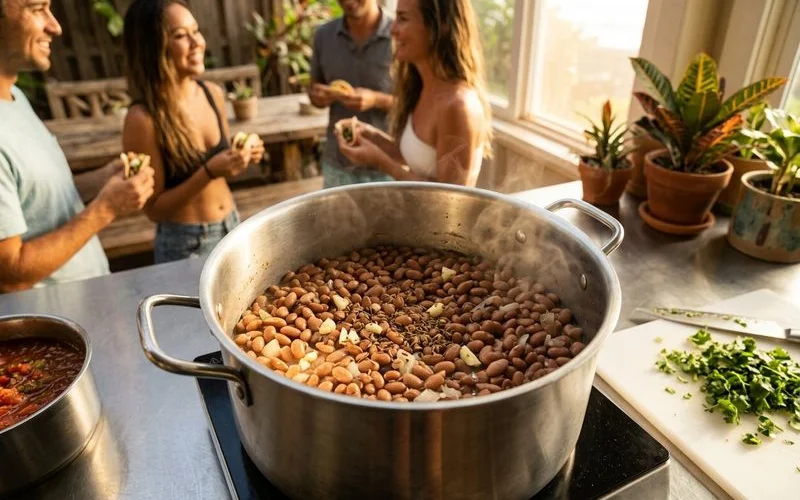
Dried pinto beans are sorted, rinsed, and soaked overnight to ensure even cooking.
The soaked beans go into massive pots with fresh water, diced onion, whole garlic cloves, cumin, and bay leaves.
Our daily bean preparation begins the night before to guarantee the perfect texture.
This extended cooking time fills the kitchen with a rich, earthy aroma.
The gentle heat allows the beans to absorb the seasonings deeply while developing a creamy, tender texture.
We simmer them slowly for three to four hours.
The whole beans go straight into bowls and burritos, swimming in their own flavorful, savory broth.
Mashed beans are finished in a hot pan with a touch of lard and extra spices.
Our refried beans deliver a rich depth that canned versions simply cannot match.
Rice That Actually Has Flavor
Rice usually functions as a bland, heavy filler designed to bulk up a cheap meal.
A truly great cilantro lime rice must hold its own alongside bold salsas and marinated meats.
Our recipe starts by toasting long-grain white rice in a dry pan with a small amount of oil.
Toasting the grains between 280 and 330 degrees Fahrenheit initiates the Maillard reaction.
Amino acids and reducing sugars break down and rearrange, releasing flavor compounds called pyrazines that create a rich, nutty taste.
We do this to trigger a specific chemical reaction before any liquid hits the pan.
This dry heat also modifies the starch on the outer layer of the rice.
Partial gelatinization prevents the grains from breaking down into a gummy, sticky paste during the boiling phase.
We want every single grain to remain fluffy and distinct inside your burrito.
Here is the exact progression of our rice:
- The Dry Toast: Grains hit a hot pan to activate the Maillard reaction.
- The Simmer: We cook the toasted grains in a rich chicken broth, lime juice, and garlic.
- The Finish: Freshly chopped cilantro and a final squeeze of lime are folded in.
- The Rotation: Small batches are cooked continuously to prevent drying out.
Serving fresh batches guarantees a bright, fragrant side dish that actually enhances the main protein.
The rice never sits around long enough to dry out under a heat lamp.
Our cooks monitor the rice stations constantly throughout the lunch and dinner rushes.
Tortillas and Everything Else
A taco is only as good as the vessel holding it together.
Cold, floppy wrappers straight out of a plastic bag simply ruin a great meal.
Our local supplier crafts exceptional corn tortillas using the traditional, ancient method of nixtamalization.
Soaking dried kernels in an alkaline solution like calcium hydroxide releases bound niacin, also known as Vitamin B3.
This treatment increases available calcium by up to 750 percent and dramatically reduces harmful mycotoxins.
We insist on this specific process because it transforms the nutritional value and texture of the corn.
The alkaline soak softens the outer hull, allowing the ground masa to bind together perfectly without crumbling.
Every single tortilla gets warmed and finished on a flat griddle right before serving.
Our cooks leave them on the heat just long enough to develop a slight char and a deep, toasty corn flavor.
That same scratch-made philosophy applies to our entire condiment line:
- Cilantro Lime Crema: Fresh sour cream whipped with lime zest, chopped cilantro, and kosher salt.
- Pickled Red Onions: Thinly sliced and submerged in a vinegar brine heavily seasoned with oregano and whole peppercorns.
- Guacamole: Mashed daily from ripe avocados, never squeezed from a pre-oxidized plastic pouch.
- Proprietary Seasoning: A custom blend of dried spices mixed in-house for perfect consistency.
Why We Refuse to Take Shortcuts
The practical argument for pre-made restaurant ingredients is very compelling on a spreadsheet.
Powdered mixes and bucket sauces save massive amounts of time and drastically reduce labor costs.
Our management team gets pitched by food service suppliers every single year.
A 2026 Technomic survey actually proves that 34 percent of US consumers prioritize “made from scratch” or “natural ingredients” when choosing where to eat.
The beachgoers and locals on the North Shore can immediately taste the difference between a real kitchen and a reheating station.
We taste those “just like homemade” supplier samples and politely decline every time.
”Authenticity requires a strong foundation of real, unprocessed ingredients, and compromising that foundation destroys the exact reason people line up at the truck.”
Authenticity requires a strong foundation of real, unprocessed ingredients.
Compromising that foundation destroys the exact reason people line up at the truck.
Our team embraces the harder, more expensive path because it yields a superior product.
Their eyes go wide because they never expected a casual beach meal to pack such complex, vibrant flavors.
That genuine reaction validates every early morning and every extra hour of prep.
We love watching a first-time visitor take a bite of a burrito loaded with slow-cooked beans and fresh pineapple salsa.
Everything From Scratch: How We Make Our Salsas, Beans, and Rice
Great food requires patience, high-quality sourcing, and a refusal to cut corners.
True flavor escapism comes from applying real culinary science to fresh, local ingredients.
We invite you to taste the results of this labor firsthand.
The standard set in 2010 remains the exact standard held today.
Stop by North Shore Tacos on your next Hawaiian adventure to experience this commitment yourself.
Our crew is ready to serve you the best meal on the island.