When Baja Meets Hawaii: The Story of Our Fusion Cuisine is more than just an origin tale. It is a practical blueprint for honoring local ingredients.
You have probably noticed that coastal food cultures share a very specific challenge. That challenge is how to serve hyper-fresh seafood without masking its natural flavor.
Our approach at North Shore Tacos tackles this exact issue by bridging the culinary gap between Baja California and Oahu.
Serving the exact same dishes from Mexico here in Hawaii would ignore the incredible local agriculture available to us. The food we serve today is not purely Mexican, and it is not purely Hawaiian.
It is something entirely its own.
We are going to break down the history of these two distinct traditions, explain the data behind our ingredient choices, and outline how this fusion creates a better experience for our guests.
The Baja Foundation
Before setting up shop in Hawaii, years were spent exploring the legendary food stalls of Baja California. The modern fish taco actually originated in the late 1950s at the Mercado Negro in Ensenada. A vendor named Mario “El Bachigualato” started grilling cheap, plentiful angel shark for the local fishmongers.
Our team learned quickly that the brilliance of these early tacos was their unpretentious simplicity. Another local innovator, Zeferino Mancilla Fortuna, later added the iconic beer batter to the recipe. That single addition created a crispy contrast that permanently defined the region’s style.
The original Ensenada fish taco relied on three non-negotiable elements:
- The Catch: Extremely fresh, locally sourced white fish or small shark.
- The Crunch: A light, fast-fried beer batter.
- The Acidity: A heavy squeeze of lime and a simple, bright salsa to cut the oil.
These historic street stalls prioritized speed and fresh catches over complex preparations. The influence of those humble carts is still massive today. A 2026 industry report from Mordor Intelligence values the United States food truck market at $1.16 billion.
This massive growth is driven largely by a continuous demand for authentic, mobile street food.
We adopted that exact street-level philosophy for the trucks in Hawaii. The best Baja vendors source their seafood daily and prepare their salsas from scratch every single morning. Taking shortcuts always shows up in the final product.
That obsessive attention to quality became the foundation for everything we do.
Arriving on the North Shore
Relocating to Oahu’s North Shore introduced a completely different agricultural landscape. The sheer abundance of tropical fruit and locally grown vegetables was staggering compared to mainland supplies.
Our kitchen gained access to some of the highest-quality produce in the world. Organizations like the North Shore Economic Vitality Partnership have completely transformed local farming. By 2026, their GroupGAP program successfully supported over 50 local farms across the islands.
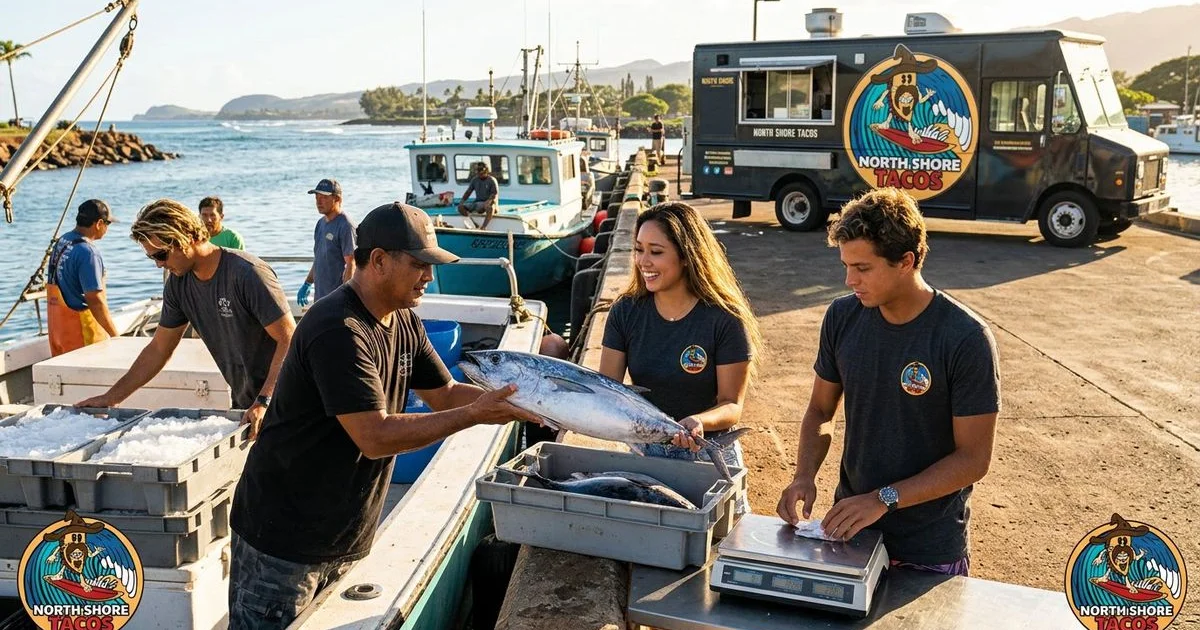
This vibrant network ensures a steady supply of certified, wholesale-ready produce. Local sourcing meant acquiring incredibly sweet pineapples, rather than the pale, sour versions shipped to mainland grocery stores. Island fishermen also provided fresh catches like Mahi Mahi, Ahi, and Ono just hours before the fish hit the plate.
We realized almost immediately that replicating a strict Baja menu would be a missed opportunity. The local ingredients demanded to be showcased.
Here is a quick breakdown of how North Shore agriculture elevates the dishes:
- Locally Caught Pelagic Fish: Mahi Mahi and Ono offer a firmer texture and cleaner flavor than the traditional angel shark used in Mexico.
- Kahuku Sweet Corn: Grown right along the Kamehameha Highway, this local variety provides a much sweeter, crisper bite than standard mainland corn.
- Tree-Ripened Fruits: Mangoes and papayas sourced from nearby farms deliver an intense, natural sweetness that balances spicy marinades perfectly.
The goal shifted from pure replication to thoughtful innovation. Creating a menu that honors both regions became the primary focus.
The Fusion Takes Shape
The evolution of the menu happened gradually, one ingredient at a time. Finding the perfect balance required extensive testing and a willingness to adapt traditional recipes.
Perfecting the Pineapple Salsa
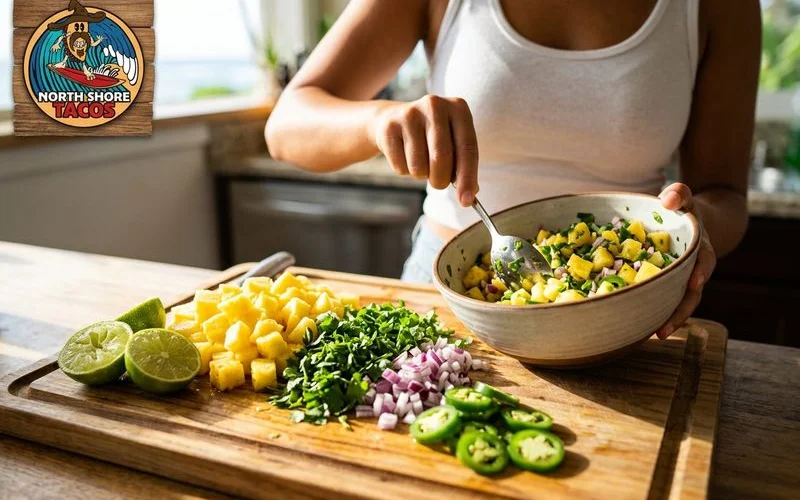
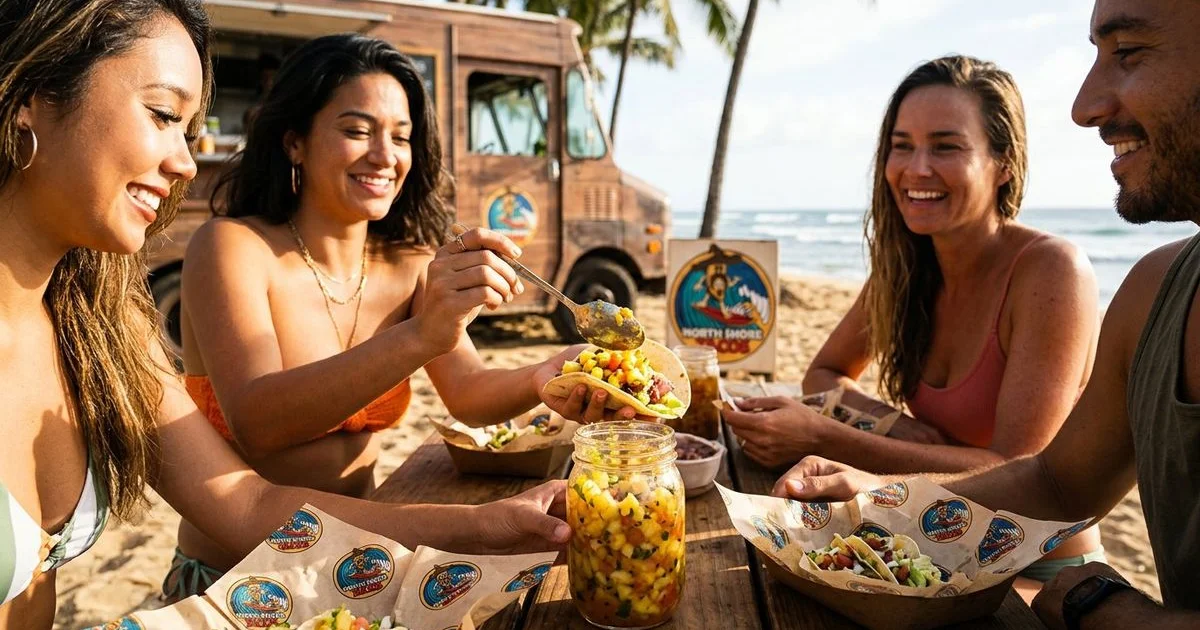
Traditional Baja tacos rely on a simple tomato-based pico de gallo or a tomatillo salsa verde. Both are excellent options, but experimenting with fresh North Shore pineapple changed everything.
Our chefs often incorporate the native Hawaiian chili pepper to elevate the flavor profile. To put the heat difference in perspective, a standard jalapeño registers between 2,500 and 8,000 Scoville Heat Units.
The Hawaiian chili pepper packs a much larger punch, hitting between 50,000 and 70,000 Scoville Heat Units. This fiery addition creates a topping that cuts through the richness of fresh fish in a way that traditional salsas cannot match.
Grilling Over Frying
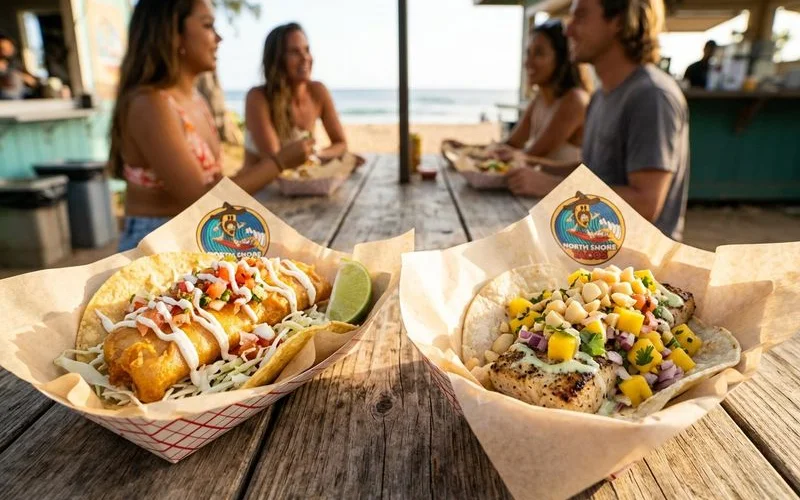
The classic Baja fish taco is battered and fried, which is undeniably delicious. Heavy batters, though, tend to hide the delicate flavor of premium North Shore seafood.
We transitioned to grilling or blackening the fish to let the natural flavor of fresh Mahi Mahi and Ahi shine through. This preparation method also aligns much better with the active lifestyle of the North Shore.
A lighter, protein-rich taco is exactly what adventure tourists and local surfers want after a long day in the water.
Island-Inspired Proteins and Sauces
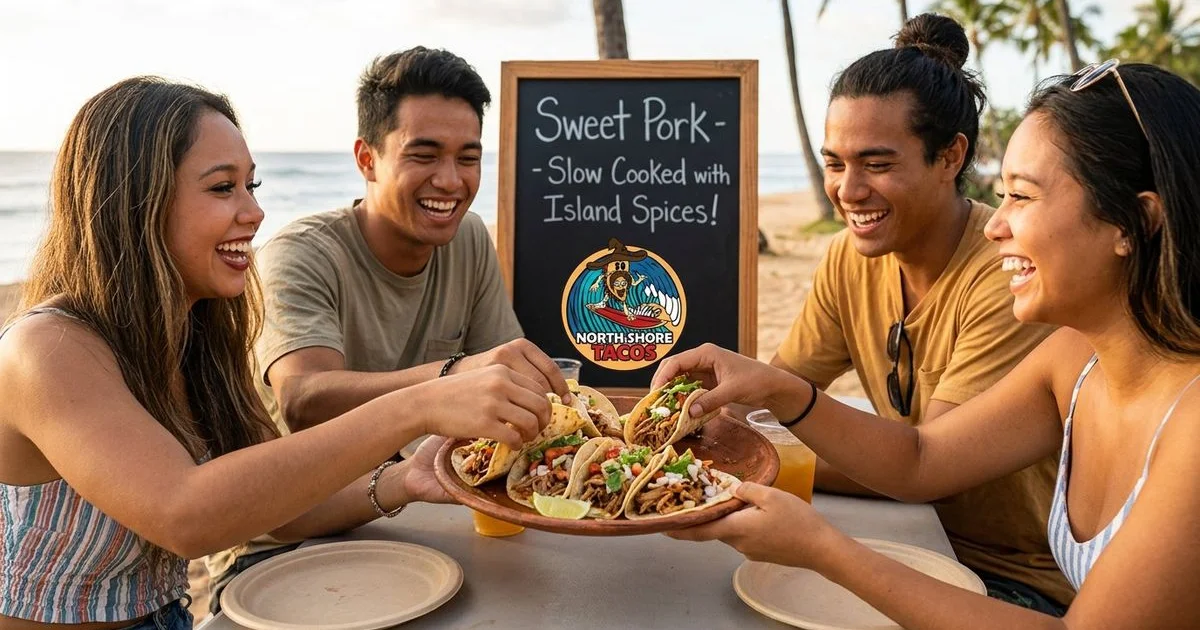
Combining a traditional Mexican carnitas preparation with Hawaiian-inspired flavors yielded incredible results. Slow-cooking the pork with brown sugar, garlic, ginger, and star anise gives a direct nod to Hawaii’s diverse cultural heritage.
Our cilantro lime crema completely replaced the traditional Baja white sauce. Using fresh lime zest and chopped cilantro creates a more herbaceous profile that pairs perfectly with tropical fruit salsas.
Some things should never be altered, which is why the classic corn tortilla stayed. The corn tortilla remains the undisputed foundation of great taco making, and it anchors all of the wilder flavor combinations.
Baja vs. Hawaiian Fusion: The Key Differences
| Ingredient Component | Traditional Baja Style | Our North Shore Fusion |
|---|---|---|
| Primary Fish | Battered Angel Shark or Pollock | Grilled Mahi Mahi, Ahi, or Ono |
| Salsa Base | Tomato Pico de Gallo | Fresh Local Pineapple |
| Heat Source | Jalapeño (2,500 - 8,000 SHU) | Hawaiian Chili Pepper (50k - 70k SHU) |
| Cream Sauce | Standard White Sauce | Cilantro Lime Crema |
Why the Fusion Works
On paper, combining Baja and Hawaiian cuisines might seem completely arbitrary. Examining both traditions closely reveals a striking amount of overlap.
Shared Coastal Values
Both are historic coastal cultures built heavily around fresh seafood. Both regions value simplicity and prefer letting high-quality ingredients speak for themselves.
Our culinary team recognized that both locations also boast incredibly strong street food traditions. Food in these environments is meant to be casual, highly accessible, and completely unpretentious.
The fusion succeeds because the foundation is built on these shared cultural pillars:
- Casual Consumption: Meals are designed to be eaten by hand, often outdoors near the water.
- Hyper-Local Sourcing: Both cultures rely on the specific fish and produce caught or grown within a few miles of the kitchen.
- Bold Condiments: Acidic, spicy salsas and chili waters are used to elevate the protein.
The Original Plate Lunch Influence
Hawaii itself is fundamentally a fusion culture. The iconic plate lunch is a perfect example of this historical blending.
During the late 1800s plantation era, immigrant laborers from Japan, China, Portugal, and the Philippines worked together in the sugar fields. These workers brought their leftovers in bento-style boxes and shared them during communal breaks.
That daily exchange birthed the modern Hawaiian plate lunch. The people of Hawaii have always been open to combining techniques from different cultures to create something delicious.
We feel that the Baja-Hawaiian tacos fit naturally into that long, proud tradition.
What Has Changed and What Has Stayed
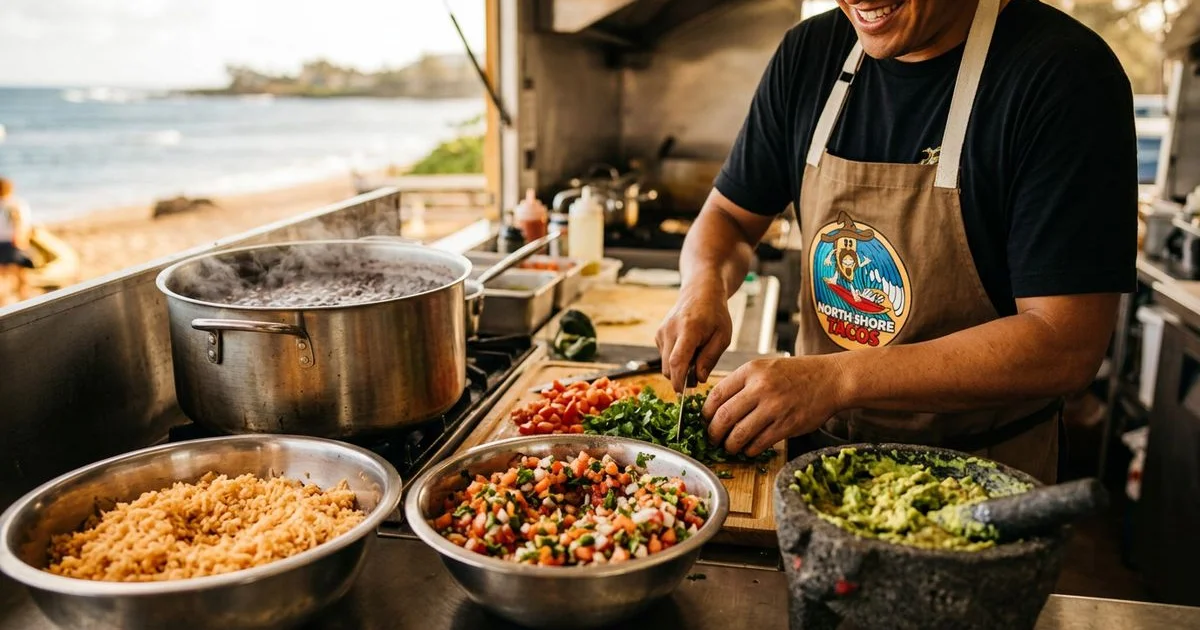
Since opening the doors in 2010, the menu has grown significantly, but the core philosophy remains untouched. We still prepare everything fresh to order and believe that a great meal should be honest.
Embracing Seasonal Inspiration
New items only make the cut when a specific ingredient combination genuinely excites the kitchen staff. For example, the mango habanero sauce on the specials board was inspired by a batch of local Keitt mangoes.
Keitt mangoes are late-season fruits, typically peaking in Hawaii between August and October. They are famous for their massive size and completely fiberless texture.
The elote-style street corn served during the summer months is another direct transplant from Mexican culture.
Our kitchen adapted this classic dish by utilizing Oahu’s famous sweet Kahuku corn. This specific variety is known for its high sugar content, which caramelizes beautifully when grilled and coated with cotija cheese.
Preserving the Classics
Certain core recipes are strictly off-limits for alteration.
“Innovation is important, but true consistency is what builds a loyal community over a decade.”
The signature pineapple salsa recipe has not been changed since its perfection in 2011.
Our sweet pork preparation is identical to what was served during the very first year of operation. The fish taco is still built on the foundational principles observed at those early Ensenada taco carts.
A Living Cuisine
The story of Baja meeting Hawaii is an ongoing journey. It continues every time a fresh piece of Mahi Mahi hits the grill and is handed to a hungry guest.
The reaction is always the same. Guests take a pause, give a nod, and immediately understand exactly what the food represents.
This approach is never treated as a passing trend. It is the honest result of finding the culinary thread that connects two beautiful coastal regions.
That deep connection runs through every single plate that comes out of the truck. It is the permanent soul of the operation.
If you are exploring the island, we invite you to taste the difference for yourself. Come visit us, grab a plate, and experience When Baja Meets Hawaii: The Story of Our Fusion Cuisine today.